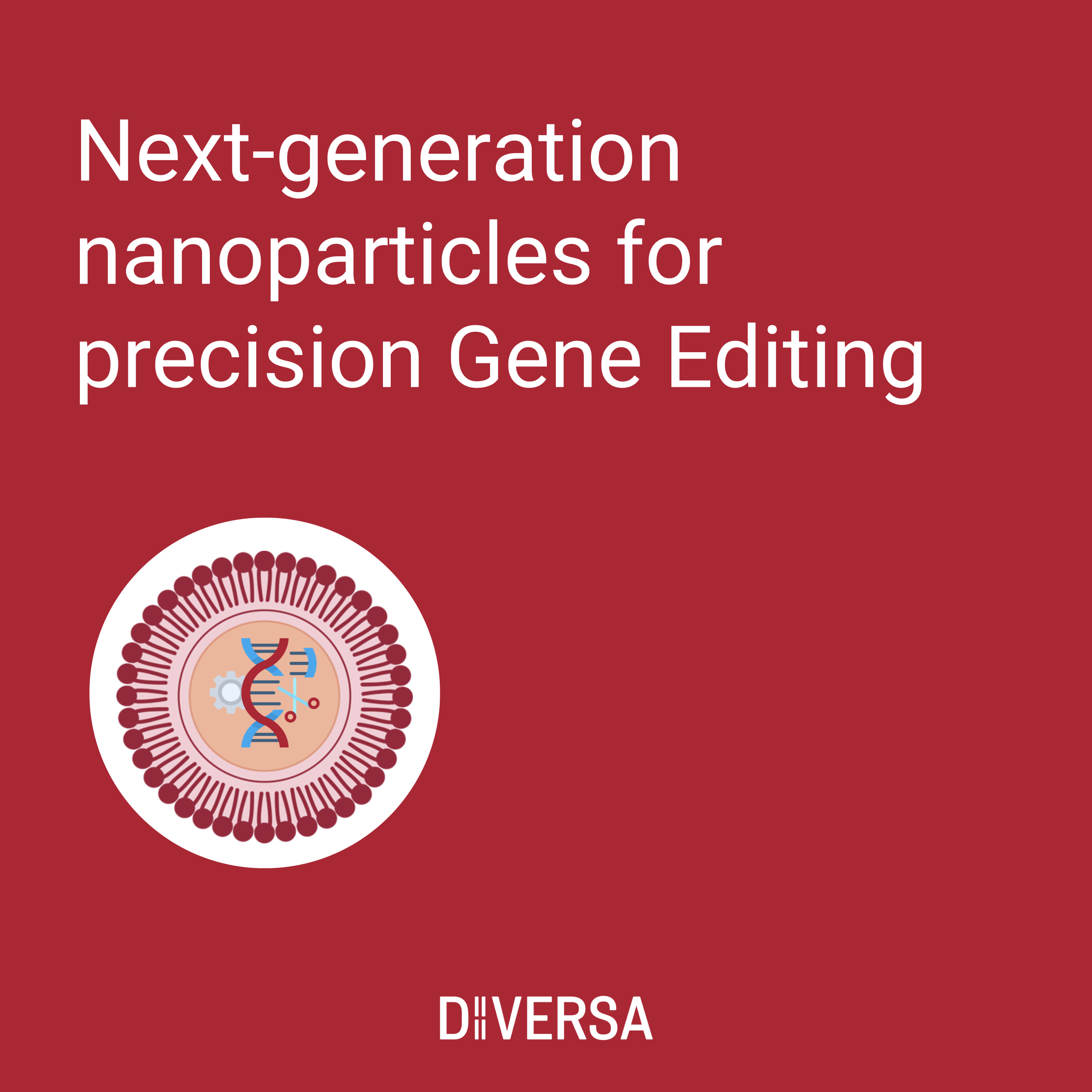
Discover how next-generation lipid nanoparticles (LNPs) are revolutionizing Gene Editing by enabling safe, precise, and efficient delivery of CRISPR and RNA-based tools.
Gene Editing is ready, and delivery is allowing translation
Gene Editing has entered the golden era. Technologies like CRISPR-Cas9, base editors, and prime editors are giving researchers and clinicians the power to rewrite the genome with unprecedented accuracy. From correcting inherited disorders to engineering immune cells to fight cancer, the potential is enormous.
However, unlocking that potential depends on one critical factor: how do we deliver the gene-editing tools into the right cells, safely and effectively? Here, that is where next-generation nanoparticles are making all the difference.
Delivering gene-editing systems is not a trivial task. These tools often involve combinations of:
- Large mRNA molecules encoding proteins like Cas9 or base editors,
- Single-guide RNAs (sgRNAs) or repair templates,
- And chemical modifications to improve stability and reduce immune response.
These components are large, fragile, and charged, making them difficult to transport into cells. Viral vectors have been widely used, but they raise serious concerns about immunogenicity, insertional mutagenesis, production cost, and limited cargo capacity.
What is needed is a delivery system that is:
- Non-viral and safe,
- Able to co-deliver multiple nucleic acid types,
- Targeted to specific tissues, and
- Scalable and clinically viable.
Next generation lipid nanoparticles, built for editing
Lipid nanoparticles have already proven their power in mRNA vaccines. Nevertheless, new designs are emerging specifically for gene editing. These next-gene nanoparticles are:
- Biodegradable: breaking down safely after delivery to reduce toxicity.
- Modular: able to co-load mRNA and sgRNA or DNA templates.
- Customizable: functionalized with ligands or antibodies for cell-type targeting beyond the liver.
By integrating these design features, these systems can deliver large payloads like Cas9 mRNA or even CRISPR-Cas9 ribonucleoproteins (RNPs), while maintaining control over where and how the editing occurs.
Precision Gene Editing in action
These delivery platforms are already demonstrating impact:
- Ex vivo applications, such as modifying CAR-T cells, use nanoparticles to safely edit patient-derived cells before reinfusion.
- In vivo editing is advancing rapidly, with promising results in treating genetic liver diseases, blood disorders, and even neurodegenerative conditions.
- Some clinical-stage platforms use nanoparticles to deliver CRISPR for diseases like transthyretin amyloidosis or hereditary angioedema, with early data showing successful gene knockdown with minimal side effects.
As LNPs evolve to target tissues like muscle, lungs, or the CNS, the door opens to a broader class of genetic diseases, and more personalized interventions.
Smart delivery for a precise future
Gene editing tools are becoming more precise, programmable, and powerful. However, without equally advanced delivery systems, their clinical utility remains limited.
Next-generation LNPs are stepping up to this challenge, enabling the safe, targeted, and scalable delivery of genome editors. They are turning cutting-edge biology into real-world therapy, one particle at a time.
The future of gene editing is not just about the tools. It is about how we deliver them, and with smarter nanoparticles, that future is closer than ever.
Visit www.diversatechnologies.com or send an email to info@diversatechnologies.com to explore our solutions.
References
Internal References
- Biodegradable Nanoparticles: Towards sustainable medicine
- Beyond the liver: Unlocking extrahepatic delivery with lipid nanoparticles
- How nanotechnology can overcome current limitations in Gene Editing with Viral Vectors
External References
- Anzalone, A. V., Koblan, L. W., & Liu, D. R. (2020). Genome editing with CRISPR–Cas nucleases, base editors, transposases and prime editors. Nature biotechnology, 38(7), 824-844. https://doi.org/10.1038/s41587-020-0561-9
- Hou, X., Zaks, T., Langer, R., & Dong, Y. (2021). Lipid nanoparticles for mRNA delivery. Nature Reviews Materials, 6(12), 1078-1094. https://doi.org/10.1038/s41578-021-00358-0
- Gillmore, J. D., Gane, E., Taubel, J., Kao, J., Fontana, M., Maitland, M. L., … & Lebwohl, D. (2021). CRISPR-Cas9 in vivo gene editing for transthyretin amyloidosis. New England Journal of Medicine, 385(6), 493-502. https://doi.org/1056/NEJMoa2107454